


Polyester Tie is made from a durable and affordable synthetic fabric. It's known for its wrinkle-resistant properties, easy care, and vibrant color retention, making it a practical choice for everyday wear. However, being a petroleum-based fiber, it has environmental considerations due to its non-biodegradability.
Polyester Tie, while affordable and easy to maintain, raises sustainability concerns due to its petroleum-based origin and slow biodegradability. However, recycling polyester ties is a sustainable solution that mitigates these issues.


|
1. Tie design |
2. Fabric Weaving |
3. Fabric inspection |
|
4. Necktie Fabric Cutting |
5. |
6. Liba Machine Sewing Necktie |
|
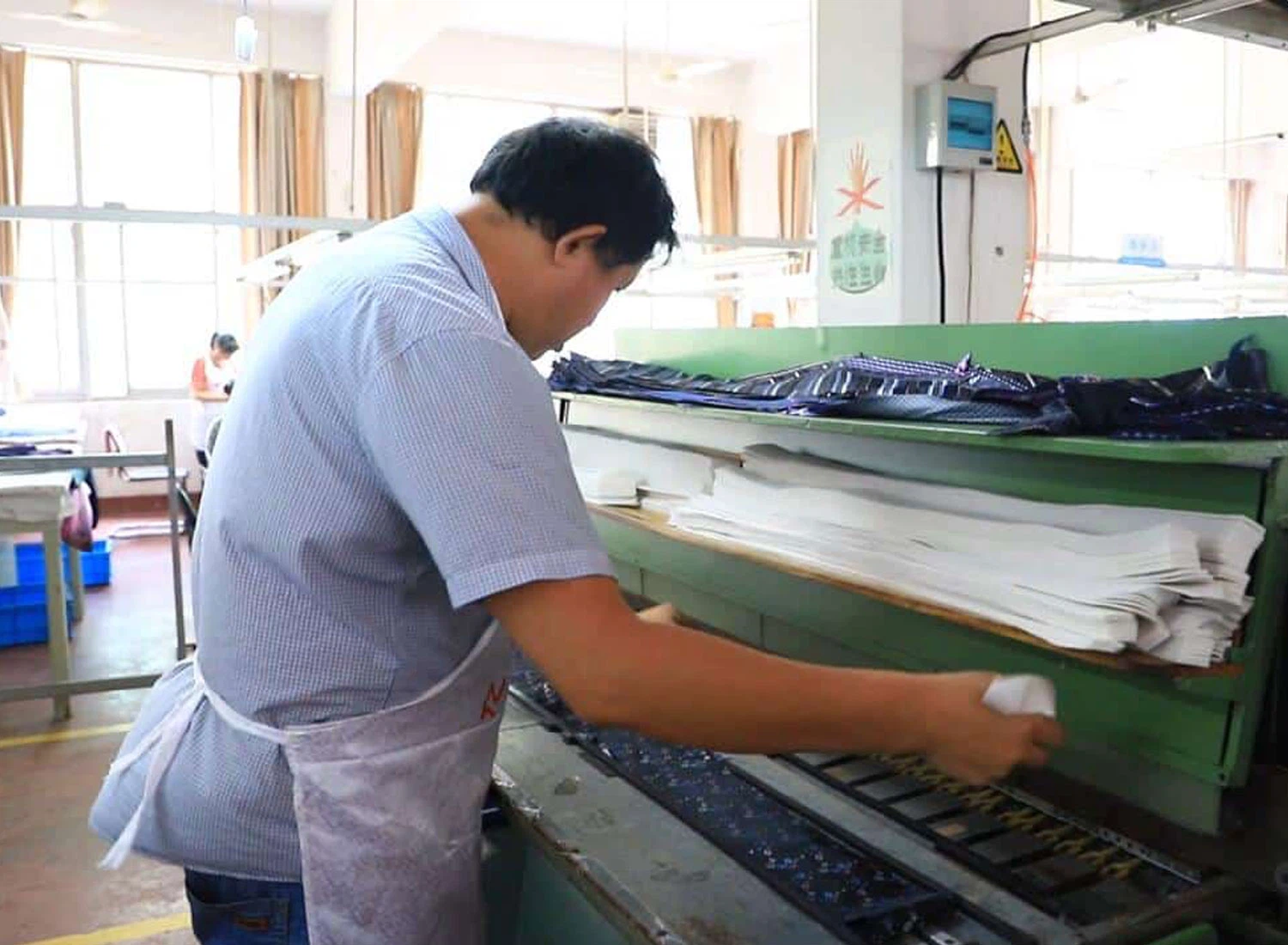
7. necktie Ironing |
8.Hand Sewing Necktie |
9. Necktie Label-stiching |
|
|
11. Necktie Needle Checking |
12. Necktie Packing Storage |




Grenadine ties are often expensive because they are made using a special weaving technique on old wooden looms, which is time-consuming and requires skilled craftsmanship. Additionally, they are usually made from high-quality silk, which adds to the cost.
A black grenadine tie can be very versatile. For a wedding or formal event, pair it with a crisp white dress shirt and a well-fitted black or dark grey suit. The texture of the grenadine fabric adds a subtle interest without being overpowering.
The main difference lies in the fabric and the weaving technique: Knit Ties: Made from knitted silk, wool, or other materials, they have a more casual, textured appearance with a squared-off end. Grenadine Ties: Made from grenadine silk, they have a more formal, open weave texture and typically feature a pointed end.
The unique texture of the grenadine fabric makes it stand out without being overly flashy, making it perfect for a formal occasion like a wedding. Just pair it with a well-fitted suit and a crisp dress shirt, and you'll be looking sharp and stylish.